Finalrentals Blog

Published in Travel Category.
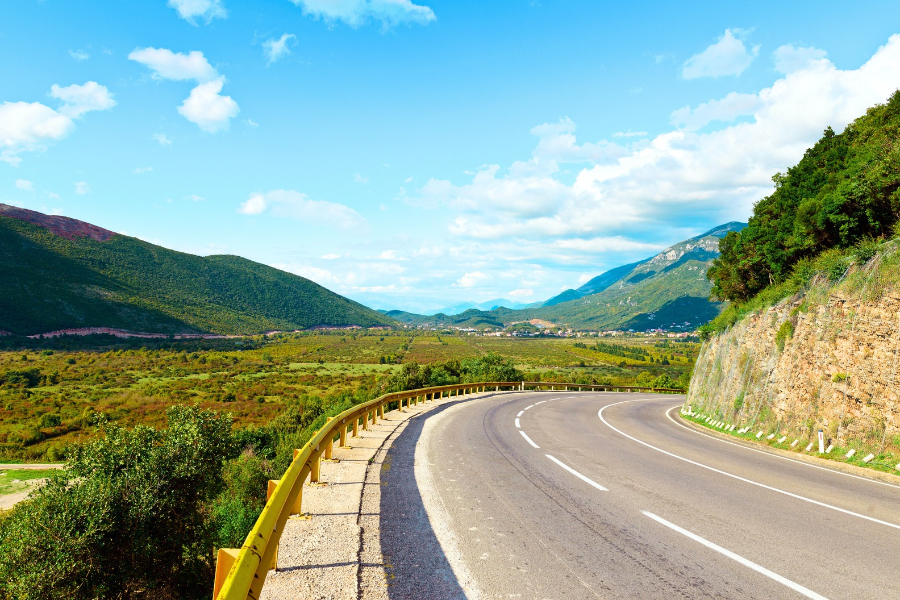
Few driving routes in Europe rival the visual drama of Montenegro’s coastal road. Known locally as the Jadranska Magistrala, this ribbon of tarmac hugs the rugged edge of the Dinaric Alps, carving its way between towering limestone cliffs and the shimmering turquoise waters of the Adriatic Sea.
Embarking on a road trip along the Adriatic Highway offers travellers a front-row seat to one of the Mediterranean’s most captivating coastlines, where centuries-old walled towns, tranquil fishing villages, and hidden swimming coves appear around every bend.
Stretching roughly 130 kilometres from the Croatian border near Herceg Novi down to the Albanian border beyond Ulcinj, the Montenegrin section of the Adriatic Highway is remarkably compact yet endlessly rewarding. While you could technically drive from one end to the other in under three hours, doing so would miss the entire point of the journey.
Why the Adriatic Highway is a Superb Driving Route
The defining feature of a road trip along the Adriatic Highway is the extraordinary contrast between mountain and sea. In northern Montenegro, the road traces the perimeter of the UNESCO-listed Bay of Kotor, often referred to as Europe’s southernmost fjord. Here, grey mountains plunge straight into glassy, sheltered waters, creating reflections that shift from emerald green to deep sapphire throughout the day. Further south, the landscape opens up to sweeping coastal panoramas, dramatic headlands, and long stretches of sandy and pebbled shoreline.
Montenegro may be one of Europe’s smallest nations, yet its cultural and geographical diversity is staggering. Within a single afternoon of driving, you can transition from Venetian-style waterfront palaces in the Bay of Kotor to lively Mediterranean resort towns, ancient Ottoman bazaars, and serene river deltas. Short driving legs mean less time staring at the tarmac and more hours spent exploring fortresses, sampling local wines, and swimming in crystal-clear bays.
While intercity buses connect Montenegro’s major coastal hubs, they operate on rigid timetables and bypass many of the country’s most enchanting spots. Having your own rental car transforms the experience entirely. You can stop at family-run konobas tucked into quiet olive groves, seek out secluded beaches away from the summer crowds, and take spontaneous detours into the mountainous interior whenever curiosity strikes.

Your Four-Trip Road Trip along the Adriatic Highway
Day 1: Herceg Novi to Kotor
Begin your road trip along the Adriatic Highway at the northern gateway of Herceg Novi, just across the border from Croatia. Known as the city of a thousand steps and lush botanical gardens, Herceg Novi is a place to stretch your legs, stroll along the Pet Danica promenade, and admire the sea views from the Kanli Kula fortress. From here, follow the coastal road eastwards as it curves tightly around the inner reaches of the Bay of Kotor, passing sleepy stone villages where local fishermen mend their nets beside miniature harbours.
Make sure to pause in Perast, an exquisite baroque town of grand stone palazzos and bell towers set against a backdrop of dramatic peaks. From the Perast waterfront, hop aboard a small local boat for the five-minute ride across to Our Lady of the Rocks, a man-made islet crowned by a charming blue-domed church and maritime museum. Back on the road, continue south along the water’s edge until you reach Kotor.
Spend the late afternoon wandering the labyrinthine cobbled alleys of Kotor’s medieval Old Town, climbing the ancient city walls for sunset views, or, if you are feeling adventurous, tackling the famous 25 hairpin bends of the Kotor Serpentine up towards Lovćen National Park.
Day 2: Tivat to Budva
Leave Kotor behind and head towards Tivat, where the sleek superyacht marina of Porto Montenegro offers a striking modern contrast to the historic towns of the inner bay. After a morning coffee overlooking the waterfront, take a scenic detour onto the rugged Luštica Peninsula. This largely unspoilt headland is dotted with centuries-old olive groves, quiet stone hamlets, and hidden coves. If time allows, join a short boat excursion from Žanjice beach to visit the glowing azure waters of the Blue Cave before rejoining the main coastal highway.
Continuing south, the road climbs above the coastline, revealing sweeping vistas of the open Adriatic. Budva is the beating heart of the Montenegrin Riviera, famous for its lively atmosphere and golden beaches. Step inside the fortified walls of Budva’s Stari Grad to explore narrow marble streets, ancient churches, and the seaside Citadel, where you can look out across the water towards the forested island of Sveti Nikola.
Day 3: Sveti Stefan to Bar
Just a few kilometres south of Budva lies arguably the most photographed spot in the entire country: Sveti Stefan. Connected to the mainland by a narrow sandy tombolo, this fifteenth-century fortified village of terracotta-roofed stone cottages sits atop a rocky islet surrounded by turquoise water. Pull into one of the designated roadside viewpoints above the peninsula to capture unforgettable photographs before continuing south along the coast.
Your next stop is Petrovac, a relaxed coastal town framed by pine forests and a crescent of reddish sand, ideal for a leisurely seaside lunch. From Petrovac, the Adriatic Highway winds past hidden bays and dramatic cliffs on its way to the port city of Bar. Rather than lingering solely by the modern waterfront, drive a short distance inland to the foothills of Mount Rumija to discover Stari Bar. Abandoned after an earthquake in 1979, this atmospheric ruined fortress town features overgrown stone aqueducts, Turkish baths, and Byzantine churches, surrounded by lively lanes selling local olive oil and pomegranate juice.
Day 4: Ulcinj to Ada Bojana
For the final leg of your road trip, drive to Montenegro’s southernmost coastal town. Situated close to the Albanian border, Ulcinj boasts a fascinating blend of Mediterranean and Oriental influences, evident in its historic mosques, bustling markets, and hilltop Old Town perched high above the waves. Spend time exploring the ancient stone ramparts that once served as a notorious haven for Adriatic pirates.
Just beyond the town lies Velika Plaža, a remarkable thirteen-kilometre stretch of fine, dark sand that stands in stark contrast to the pebbled coves further north. Follow the road all the way to its southern terminus at Ada Bojana, a triangular river island formed where the Bojana River meets the Adriatic Sea. Famous for its laid-back vibe and traditional wooden stilt houses lining the riverbanks, Ada Bojana is the ultimate place to celebrate the end of your journey with a feast of freshly grilled sea bass and local wine as the sun dips below the horizon.

Easy Tips for a Road Trip along the Adriatic Highway
Know the Right Timing
The Adriatic Highway is a two-lane road for most of its length, which means traffic can build up quickly during the peak months of July and August, particularly around Kotor, Tivat, and Budva. Whenever possible, plan your road trip along the Adriatic Highway during the shoulder seasons of May, June, September, or early October. During these months, you will enjoy warm sunshine, swimmable sea temperatures, and dramatically quieter roads. If you are travelling in midsummer, set off early in the morning to beat the heaviest congestion.
Choose the Perfect Car
Selecting the right vehicle makes a significant difference on Montenegrin roads. A compact or mid-sized hatchback is generally the best choice, as it offers enough engine power to handle steep coastal gradients and mountain detours while remaining nimble enough to navigate narrow Old Town streets and tight parking spaces. If you prefer an automatic transmission, be sure to reserve your vehicle well in advance, as manual cars still dominate local rental fleets.
Obey the Driving Rules
Montenegro enforces strict driving regulations that every visiting driver should keep in mind. Dipped headlights must be switched on at all times, even in bright sunshine, and mobile phone use without a hands-free system is strictly prohibited. The legal blood alcohol limit is a low 0.03 per cent, so it is best to avoid alcohol altogether when driving. Keep an eye on speed limits, which drop sharply when passing through coastal villages, and remain vigilant around blind corners where local drivers occasionally overtake impatiently.
Use the Local Car Ferry
When driving around the Bay of Kotor, you can save about 45 minutes by taking the Kamenari to Lepetane car ferry across the bay's narrowest point. Ferries run continuously throughout the day and night, require no booking, and take only ten minutes to cross. However, before taking this shortcut, make sure your rental agreement explicitly allows ferry travel. If you take the ferry without a permit, it can invalidate your insurance coverage. Also, do not forget to drive the full scenic loop around the bay at least once so you do not miss Perast and the inner shoreline.

Frequently Asked Questions on the Adriatic Highway
Is the Adriatic Highway in Montenegro safe and easy to drive? The highway is well-paved and clearly signposted, making it straightforward to navigate for most confident drivers. You should still drive defensively and stay alert for sharp cliffside bends, summer congestion, and impatient local drivers overtaking on narrow sections.
How long does it take to finish the Adriatic Highway itinerary? Driving the entire Montenegrin stretch of the Adriatic Highway without stops takes roughly two and a half to three hours from the Croatian border to Ulcinj. However, allowing three to five days gives you plenty of time to explore medieval Old Towns, stop at scenic viewpoints, and enjoy leisurely coastal lunches along the way.
What is the best time of year to drive along Adriatic Highway? Late spring and early autumn offer the ideal balance of warm weather, swimmable sea temperatures, and manageable traffic. Travelling during these shoulder seasons also helps you avoid the heavy bottlenecks and peak accommodation prices of July and August.
Secure a Vehicle to Drive along the Adriatic Highway
Few journeys pack as much beauty, history, and coastal charm into a compact route as a road trip along the Adriatic Highway in Montenegro. From the dramatic fjord-like stillness of the Bay of Kotor to the medieval ramparts of Budva, the postcard perfection of Sveti Stefan, and the sweeping sands of Ulcinj, every kilometre reveals another facet of this remarkable Balkan gem.
Exploring by car frees you from rigid schedules and crowded tour buses, letting you linger and savour quiet seaside villages, hidden coves, and panoramic mountain viewpoints on your own terms. Book your rental car in Montenegro today, roll down the windows, and set off on an unforgettable coastal adventure along the Adriatic Highway.